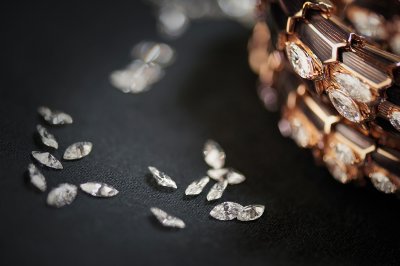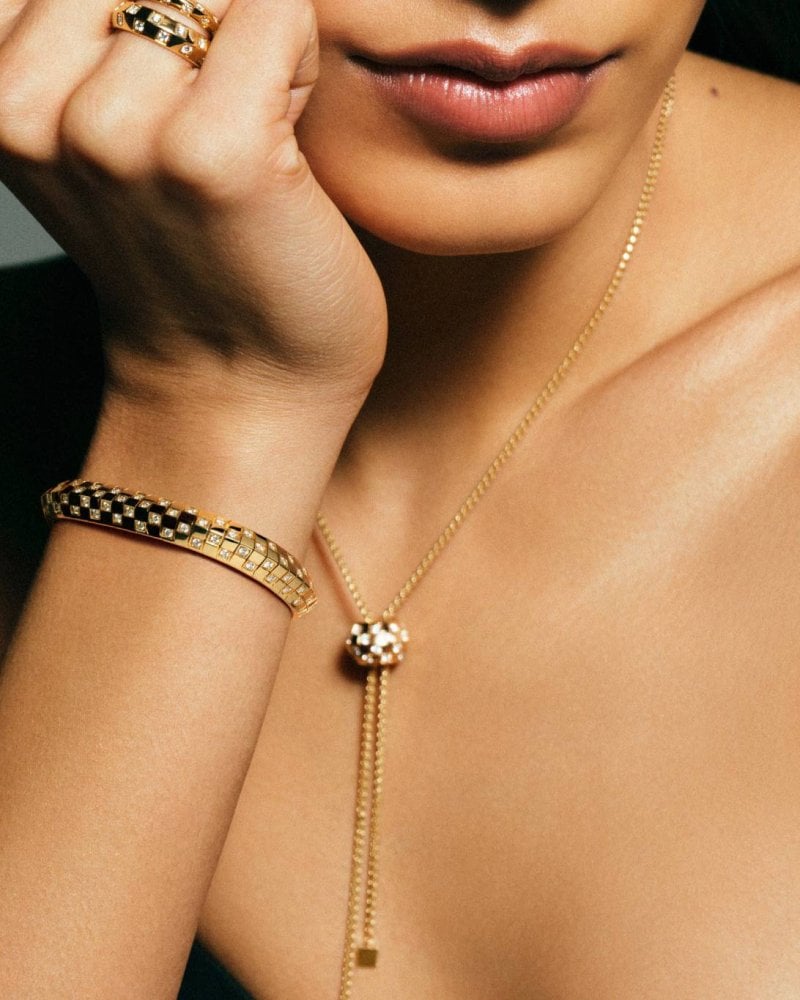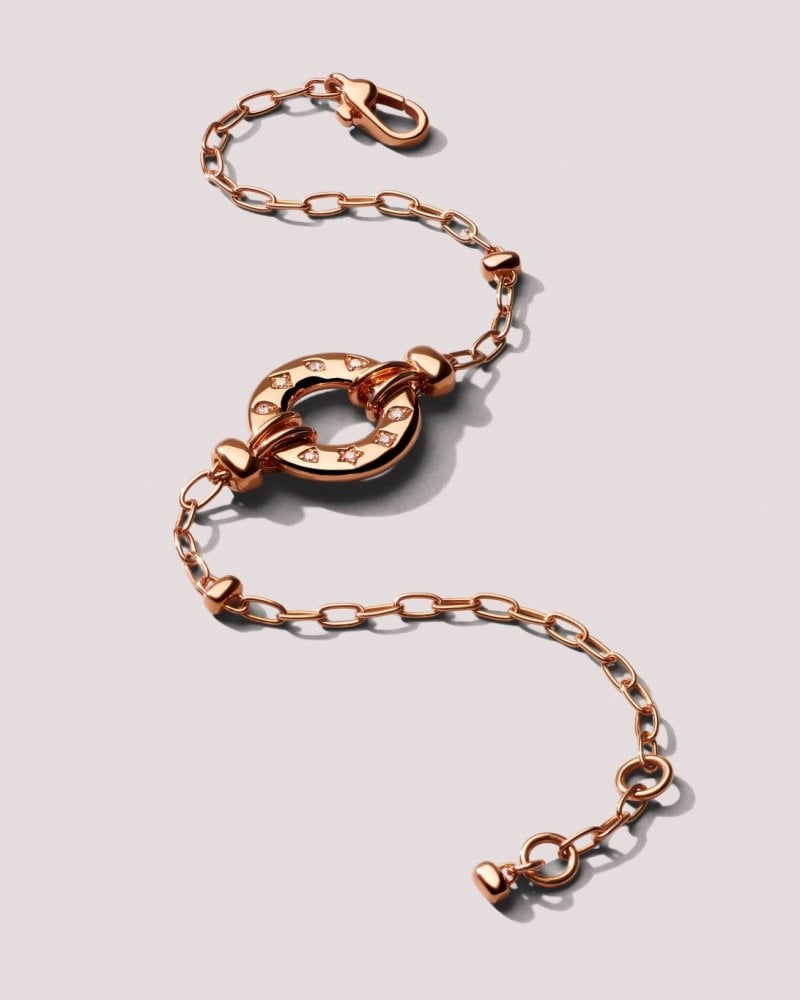






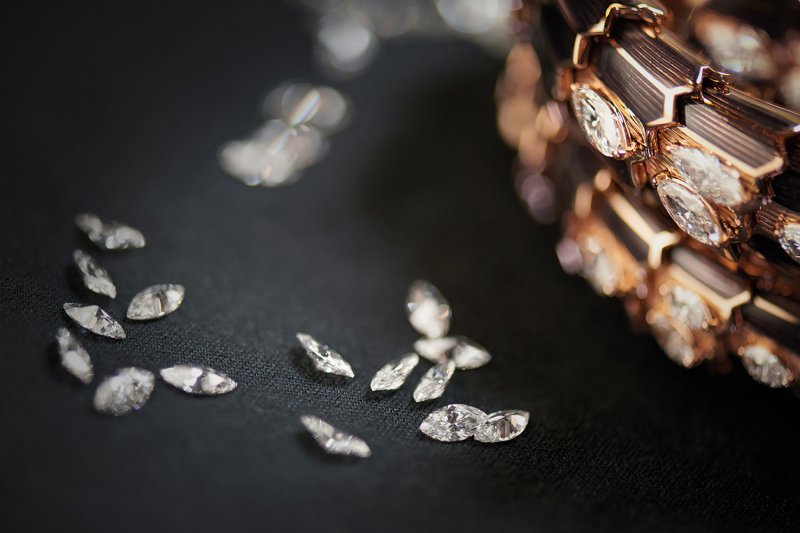
Photo Courtesy of Bulgari
When Carol Channing sang “Diamonds Are a Girl’s Best Friend” in 1949’s Broadway production “Gentlemen Prefer Blondes”, she was definitely addressing all the women in the world. These bright shiny stones have that je ne sais quoi feel, making every woman’s eye sparkle from joy. When we buy a diamond-set piece of jewelry, first and foremost we look at their shine. But what should our choices be based on? We’re here to answer that question and help you become a diamond expert.
The diamond characteristics are called the 4 Cs, which mean Cut, Color, Clarity and Carat.
1 – The cut has the greatest effect on a diamond’s beauty. The more precise the cut is, the more captivating the diamond is. It refers to how well the facets of the stone interact with light, its proportions and its overall finish – noting that this has nothing to do with its shape. American Gem Society grades the diamond’s cut on a scale from 1 to 10.
- If the grade is 0, the diamond is ideal.
- If the grade is 1, the diamond is excellent.
- If the grade is 2, the diamond is very good.
- If the grade is between 3 and 4, the diamond is good.
- If the grade is between 5 and 7, the diamond is fair.
- If the grade is between 8 and 10, the diamond is poor.
A well-cut diamond will shine more than one with a lesser cut quality, and if you compare a small well-cut one to one that is slightly larger in size with a lesser cut quality, the small one may look larger to the naked eye.
2 – When it comes to color, a diamond can come in many hues, from colorless to light yellow or light brown. Colorless diamonds are the rarest, while other natural colors such as blue, red and pink are known as “fancy” and their color grading is different than the one of white colorless diamonds. The less color a diamond has, the more its quality and value are higher. The diamond’s color should be graded when the stone is “loose”, without setting, so its color doesn’t get affected by the metal. American Gem Society grades a diamond’s color on a scale from 1 to 10.
- If the grade varies from 0.0 to 1.0, the diamond is colorless.
- If the grade varies from 1.5 to 3.0, the diamond is near colorless.
- If the grade varies from 3.5 to 4.5, the diamond is faint.
- If the grade varies from 5.0 to 7.0, the diamond is very light.
- If the grade varies from 7.5 to 10.0, the diamond is light.
3 – As for clarity, the diamond’s internal characteristics are called inclusions, while external ones are known as blemishes. It is extremely rare to find a diamond without any inclusions or blemishes and these characteristics can only be seen with magnification. The more characteristics you find in a diamond, the lower its clarity is.
- If the grade is 0, the diamond is classified as flawless or IF.
- If the grade is 1, the diamond is classified as Very Very Slightly Included or VVS1
- If the grade is 2, the diamond is classified as Very Very Slightly Included or VVS2
- If the grade is 3, the diamond is classified as Very Slightly Included or VS1
- If the grade is 4, the diamond is classified as Very Slightly Included or VS2
- If the grade is 5, the diamond is classified as Slightly Included or SI1
- If the grade varies from 6 to 7.5, the diamond is classified as Slightly Included or SI2
- If the grade varies from 6.5 to 8, the diamond is classified as Included or I1
- If the grade is 9, the diamond is classified as Included or I2
- If the grade is 10, the diamond is classified as Included or I3
4 – Finally, the carat is the diamond’s physical weight measured in metric carats. One carat equals to 1/5 gram or 0.200 grams. This weight is the most objective grade for a diamond and all it requires is a precisely balanced scale capable of measuring extremely small weights. It affects the size of the stone, but doesn’t always enhance its value, as the latter depends on its cut, color and clarity as well. If the diamond isn’t well cut, the added weight reduces its brilliance.
Now, are you ready to start searching for your diamond?
Mirella Haddad